Sleep deprivation in children is more serious than many parents realise. Even mild lack of sleep can increase the risk of depression, anxiety, aggression and concentration problems.
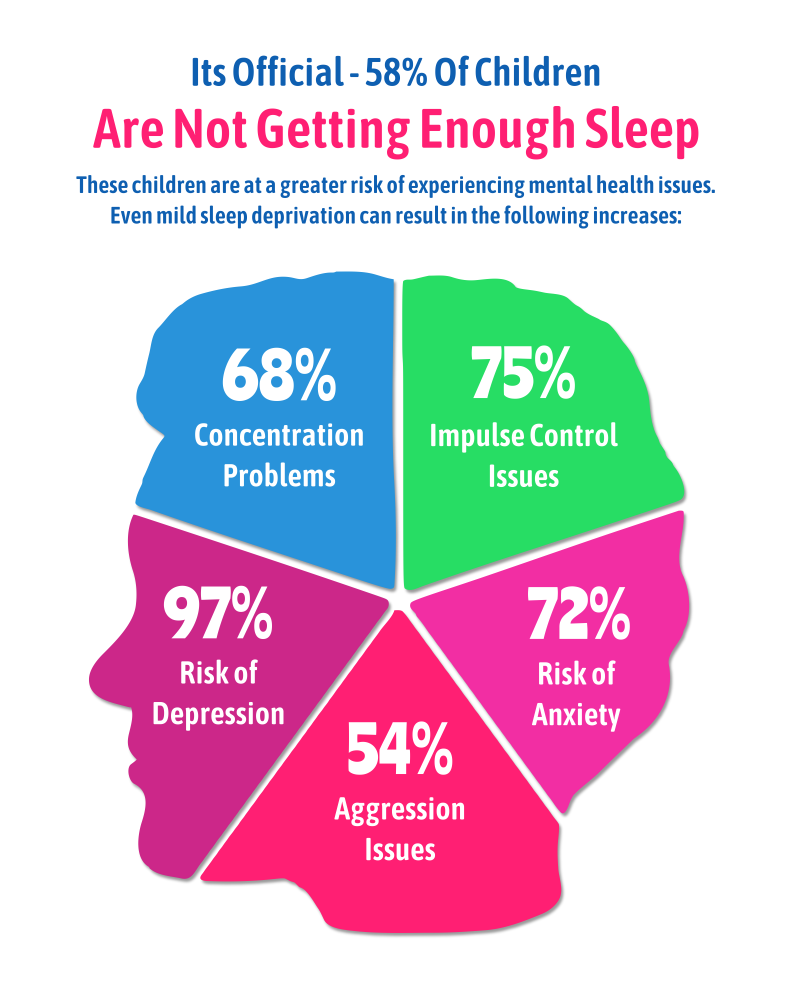
The American Academy of Sleep Medicine encourages teens (ages 13-18) to get 8 to 10 hours of sleep each night, and grade-schoolers (ages 6-12) to get 9 to 12 hours nightly.
📚 Studies show that children who are getting enough sleep have a healthier immune system, perform better in school, and are cognitively healthier than those who do not.
⚠️ Children can bounce back from a few missed hours here and there, but regular sleep deprivation will lead to difficult behaviors and health problems. If your child is irritable, has difficulty concentrating, depressed, obese, or prone to headaches, sleep deprivation could be the source.
🧠 When you sleep your brain is re-energizing the body's cells, clearing waste from the brain, and supporting learning and memory. These processes are especially important for children as they are learning and growing. When a child cannot go to sleep at night or wakes up frequently this essential development cannot occur.
😟 Some common reasons why a child cannot go to or stay asleep are fear of the dark or nightmares, unwillingness/ability to relax for sleep, or anxiety.
✅ Tips to get a good night's sleep and support cognitive health:
📵Foster a Good Sleeping Environment.
Remove distractions, including cell phones, televisions, and electronic games. Make it a rule that the bed is for sleep only. Studies show that removing electronics at least one hour before bedtime promotes better sleep.
🛌 Be sure that the bed/bedding is comfortable.
🎵 Keep the noise level down. Play light, relaxing music or no noise at all.
🌙 A dark space promotes sleep and production of melatonin (the hormone that regulates sleep and wakefulness). Turn off the lights and draw the curtains closed. For children who may be afraid of the dark, use a small, dim night light.
🌡️ Turn down the heat. Cooler temperatures help to promote deep sleep.
🌿 Essential oils can help to soothe and comfort — lavender and chamomile scents are recommended.
⏰ Establish a Bedtime Routine
Go to bed at the same time each night. Your body will recognize this routine and allow you to go to sleep faster and deeper if you stick with it!
🛁 A warm bath or shower within an hour of bedtime can warm your body passively, making it easier to get comfortable and fall asleep faster.
📵 Avoid using a cell phone, tablet, or television to help your child go to sleep. Try some of the activities listed above such as reading, meditation, or journaling instead!
🌞 Support Sleep While Awake
💤 Limit naps to 45 minutes.
🏃 Exercise for 60 minutes each day. Limit intense exercises in the evening and instead practice yoga or other slower activities.
🍽️ Limit food consumption within two hours of sleep.
👨⚕️ Talk with your child's clinician about sleep concerns.
✍️ Written by Melena Nelson
🏫 FamilyMeans School-Based Mental Health
🌐 Learn more at FamilyMeans.org
📚 Studies show that children who are getting enough sleep have a healthier immune system, perform better in school, and are cognitively healthier than those who do not.
⚠️ Children can bounce back from a few missed hours here and there, but regular sleep deprivation will lead to difficult behaviors and health problems. If your child is irritable, has difficulty concentrating, depressed, obese, or prone to headaches, sleep deprivation could be the source.
🧠 When you sleep your brain is re-energizing the body's cells, clearing waste from the brain, and supporting learning and memory. These processes are especially important for children as they are learning and growing. When a child cannot go to sleep at night or wakes up frequently this essential development cannot occur.
😟 Some common reasons why a child cannot go to or stay asleep are fear of the dark or nightmares, unwillingness/ability to relax for sleep, or anxiety.
✅ Tips to get a good night's sleep and support cognitive health:
📵Foster a Good Sleeping Environment.
Remove distractions, including cell phones, televisions, and electronic games. Make it a rule that the bed is for sleep only. Studies show that removing electronics at least one hour before bedtime promotes better sleep.
🛌 Be sure that the bed/bedding is comfortable.
🎵 Keep the noise level down. Play light, relaxing music or no noise at all.
🌙 A dark space promotes sleep and production of melatonin (the hormone that regulates sleep and wakefulness). Turn off the lights and draw the curtains closed. For children who may be afraid of the dark, use a small, dim night light.
🌡️ Turn down the heat. Cooler temperatures help to promote deep sleep.
🌿 Essential oils can help to soothe and comfort — lavender and chamomile scents are recommended.
⏰ Establish a Bedtime Routine
Go to bed at the same time each night. Your body will recognize this routine and allow you to go to sleep faster and deeper if you stick with it!
🛁 A warm bath or shower within an hour of bedtime can warm your body passively, making it easier to get comfortable and fall asleep faster.
📵 Avoid using a cell phone, tablet, or television to help your child go to sleep. Try some of the activities listed above such as reading, meditation, or journaling instead!
🌞 Support Sleep While Awake
💤 Limit naps to 45 minutes.
🏃 Exercise for 60 minutes each day. Limit intense exercises in the evening and instead practice yoga or other slower activities.
🍽️ Limit food consumption within two hours of sleep.
👨⚕️ Talk with your child's clinician about sleep concerns.
✍️ Written by Melena Nelson
🏫 FamilyMeans School-Based Mental Health
🌐 Learn more at FamilyMeans.org

by Kiran Sandhu
• 4 weeks, 1 day ago



Comments (0)
Sign in to join the conversation
No comments yet. Be the first to share your thoughts!