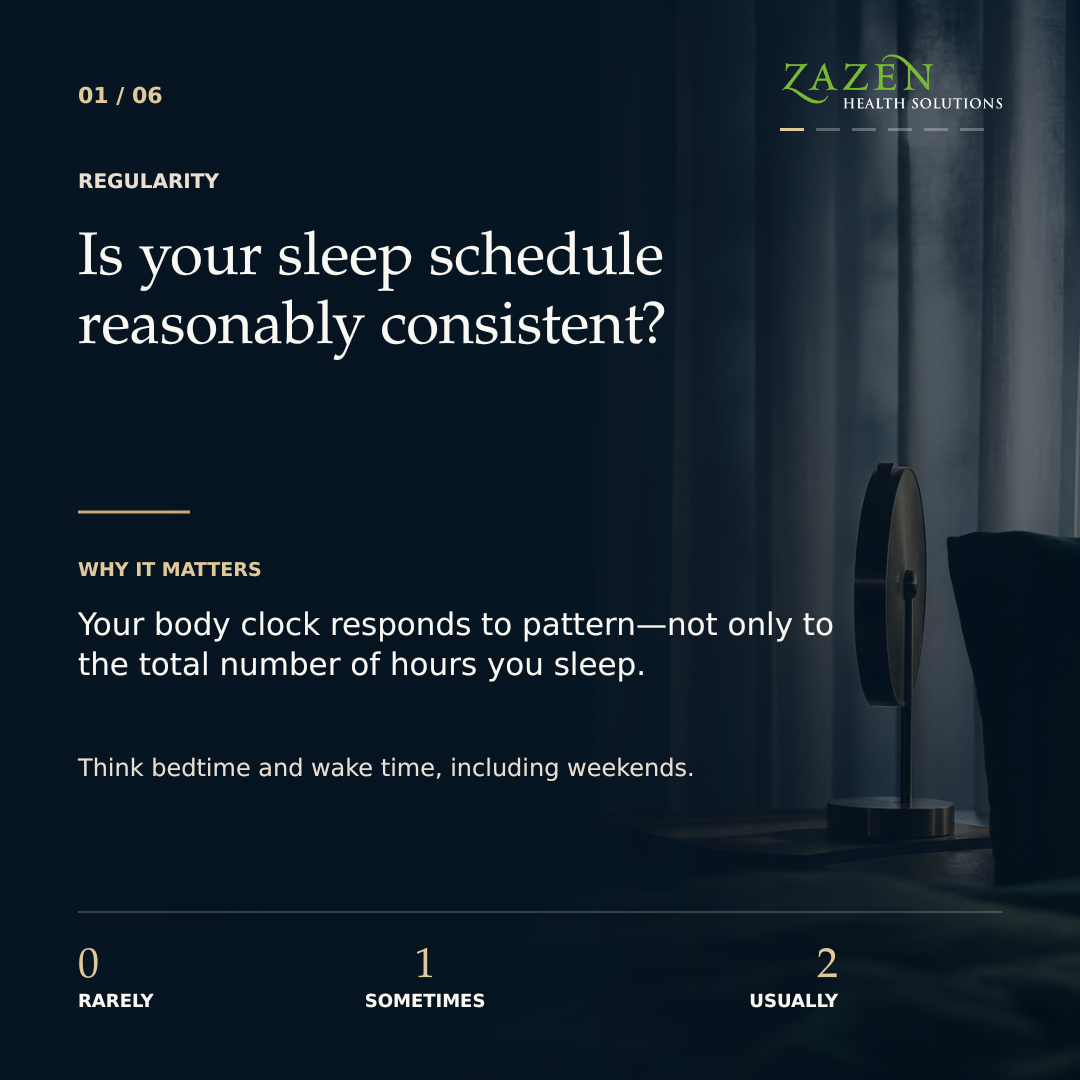
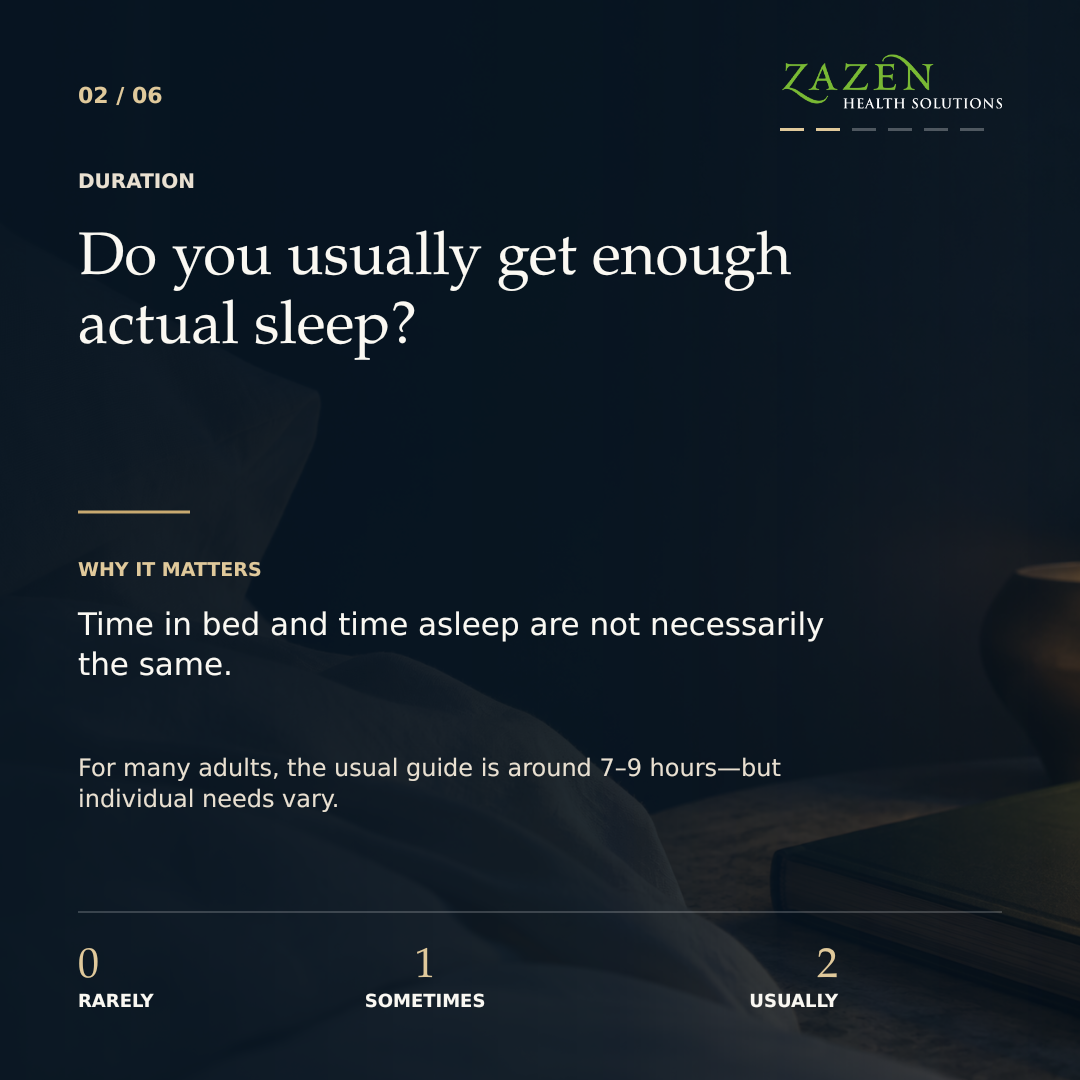
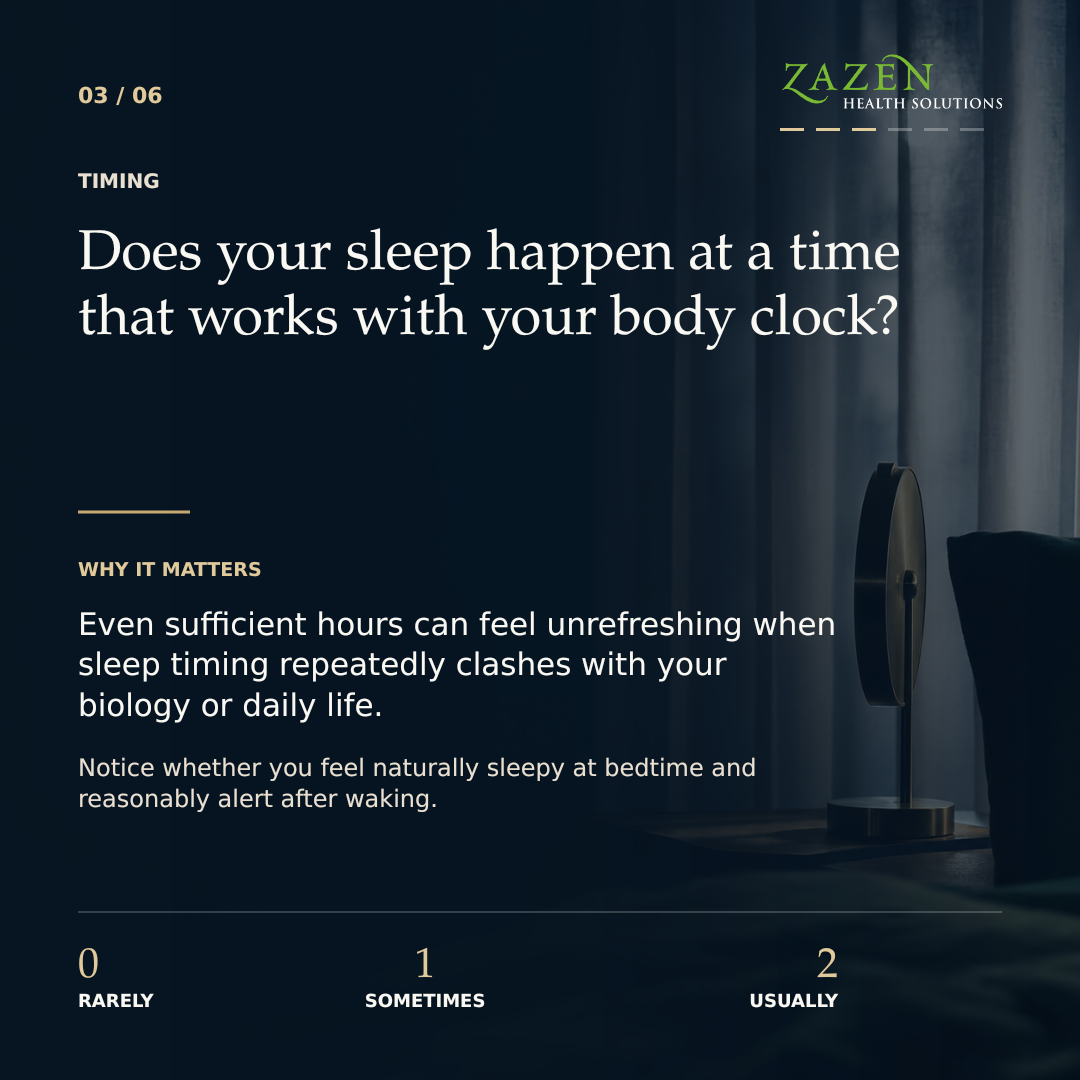
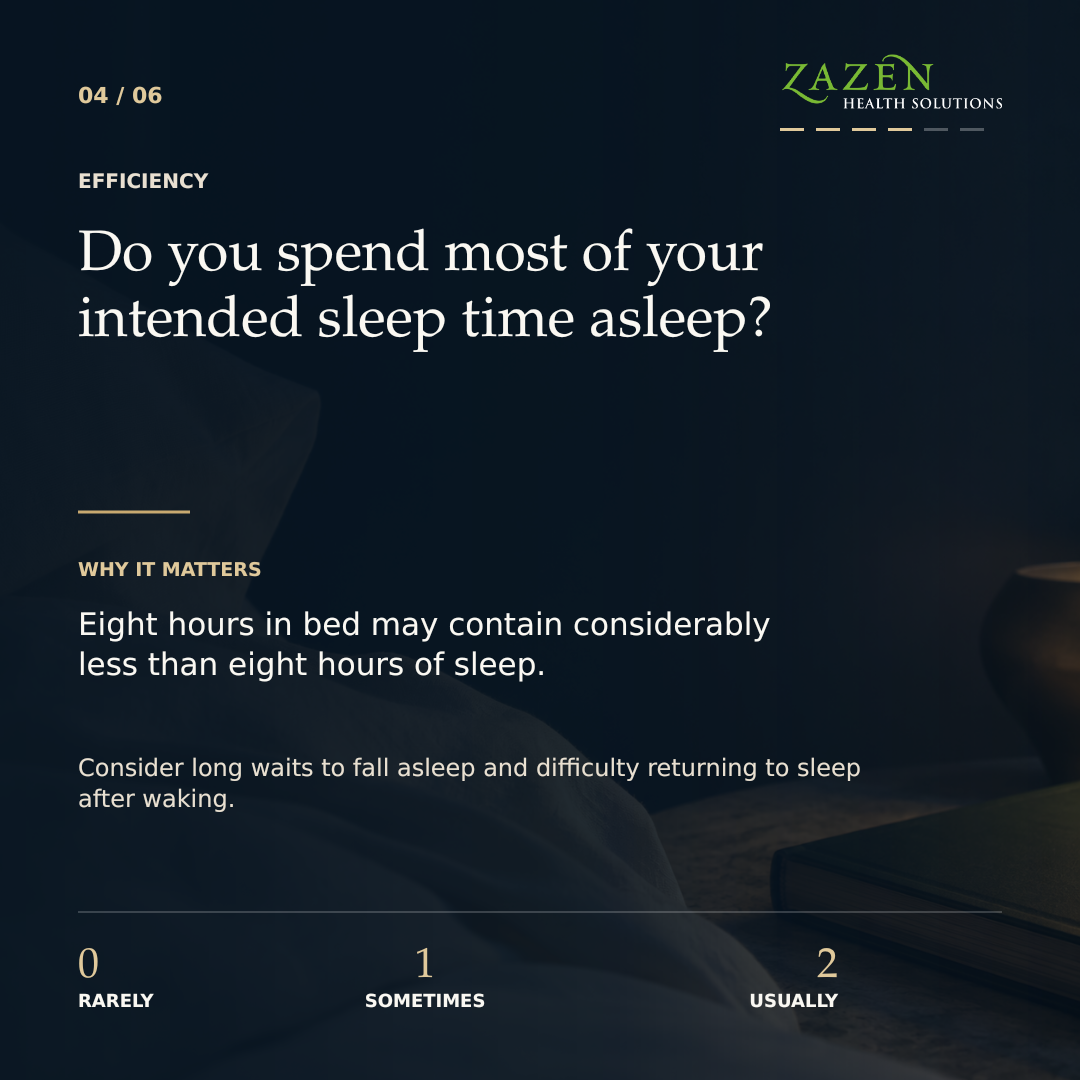
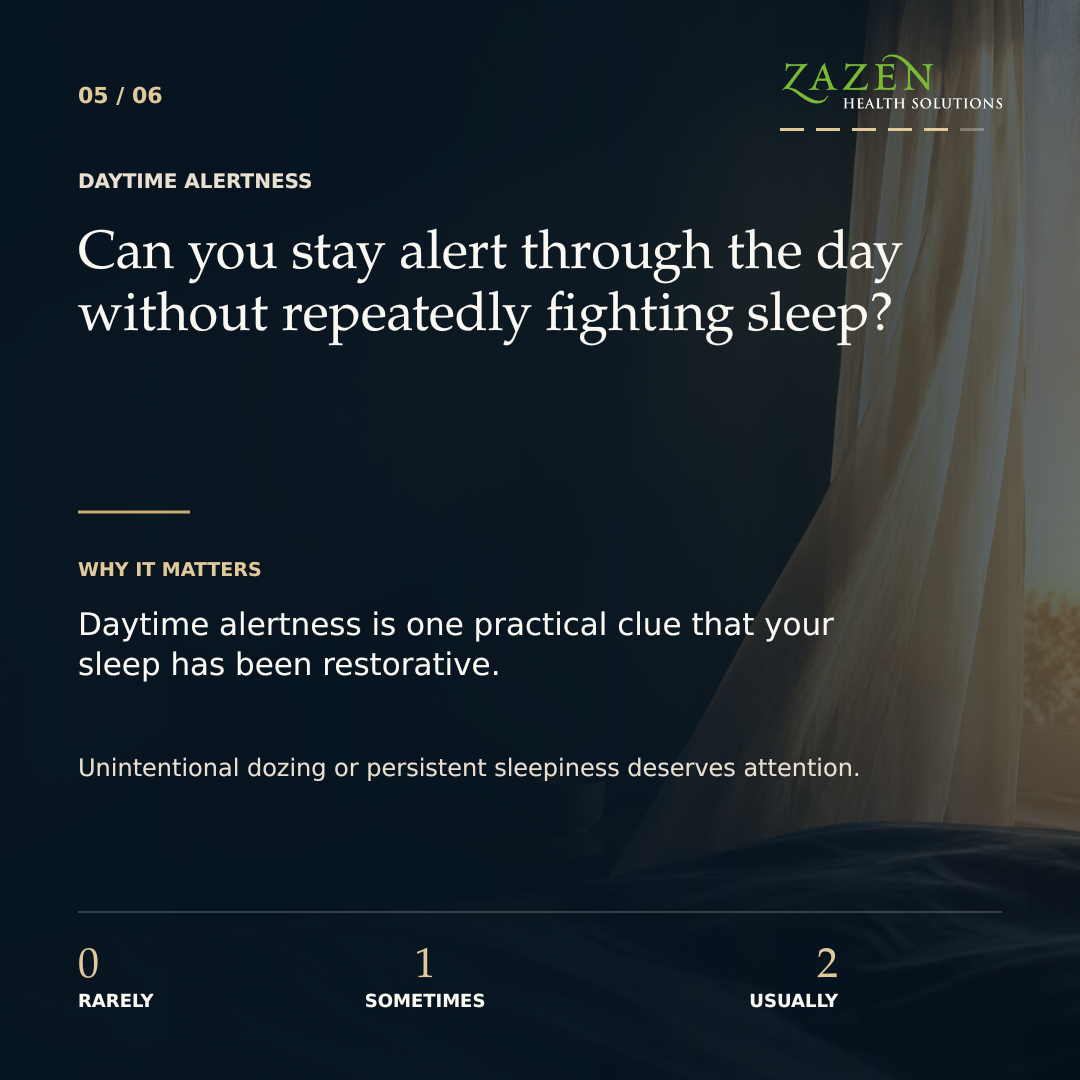
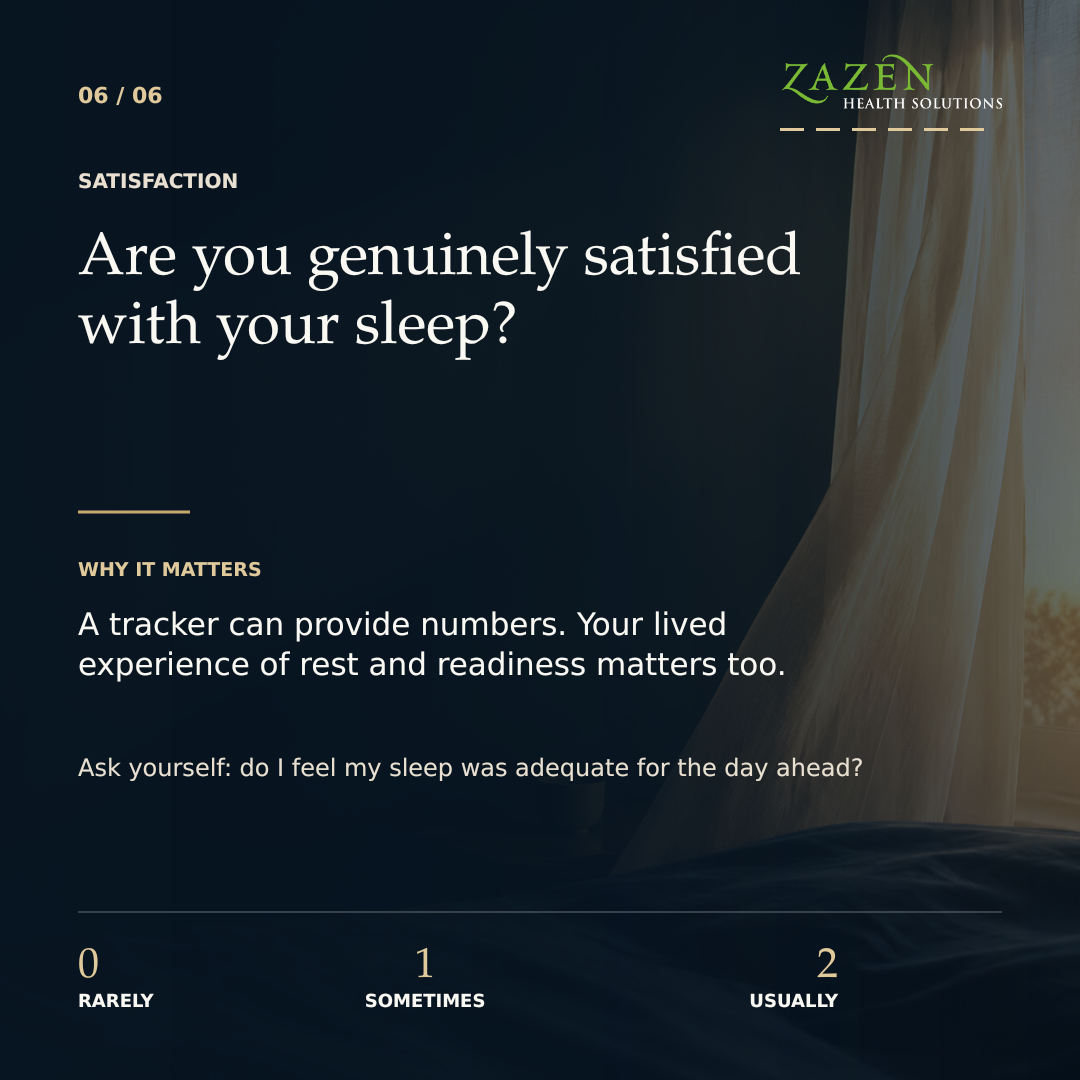
The 60-Second Sleep Health Check.

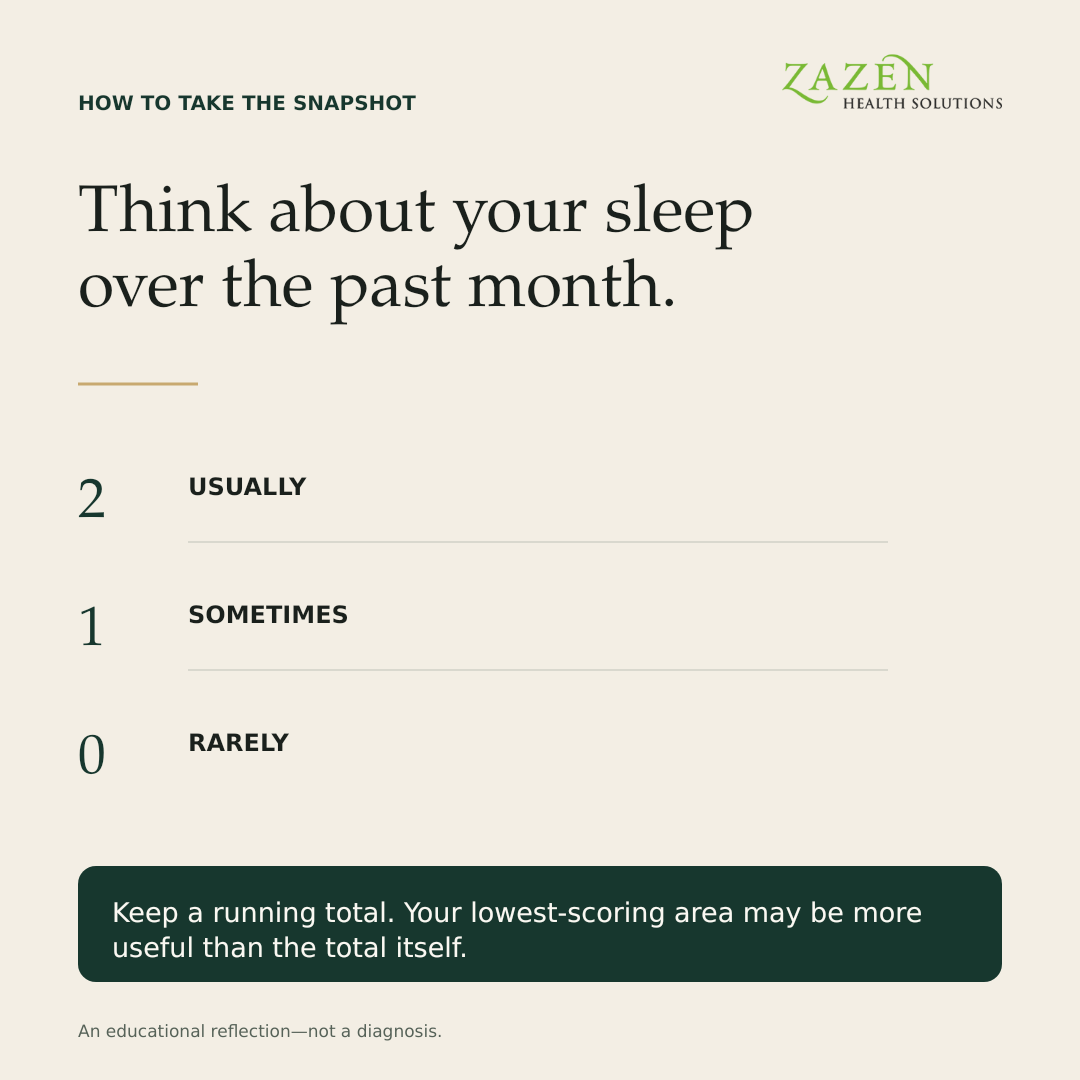
Most of us judge our sleep by one question: “Did I get enough hours?”
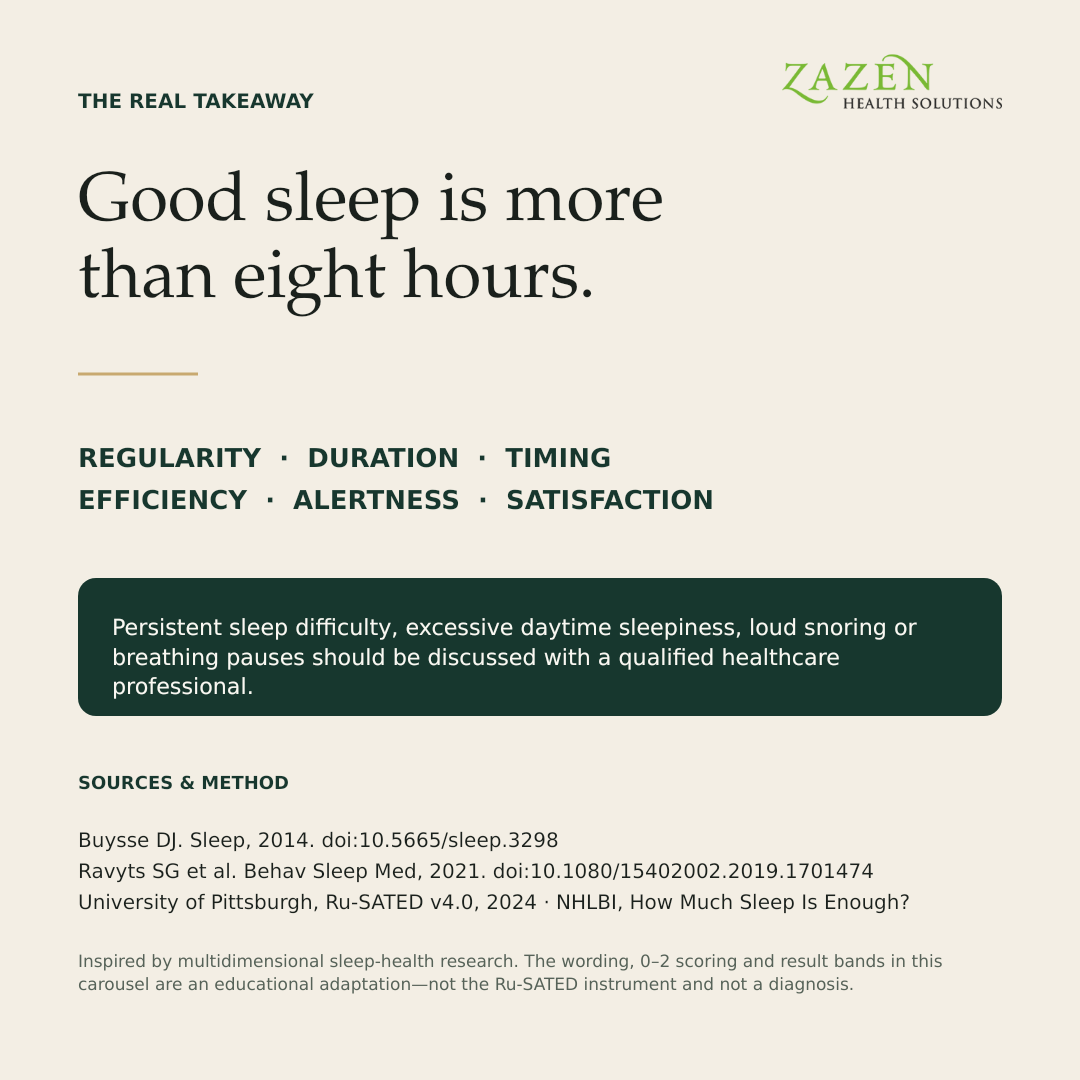
But healthy sleep is also shaped by its regularity, timing, continuity—and how alert and restored we feel the next day.

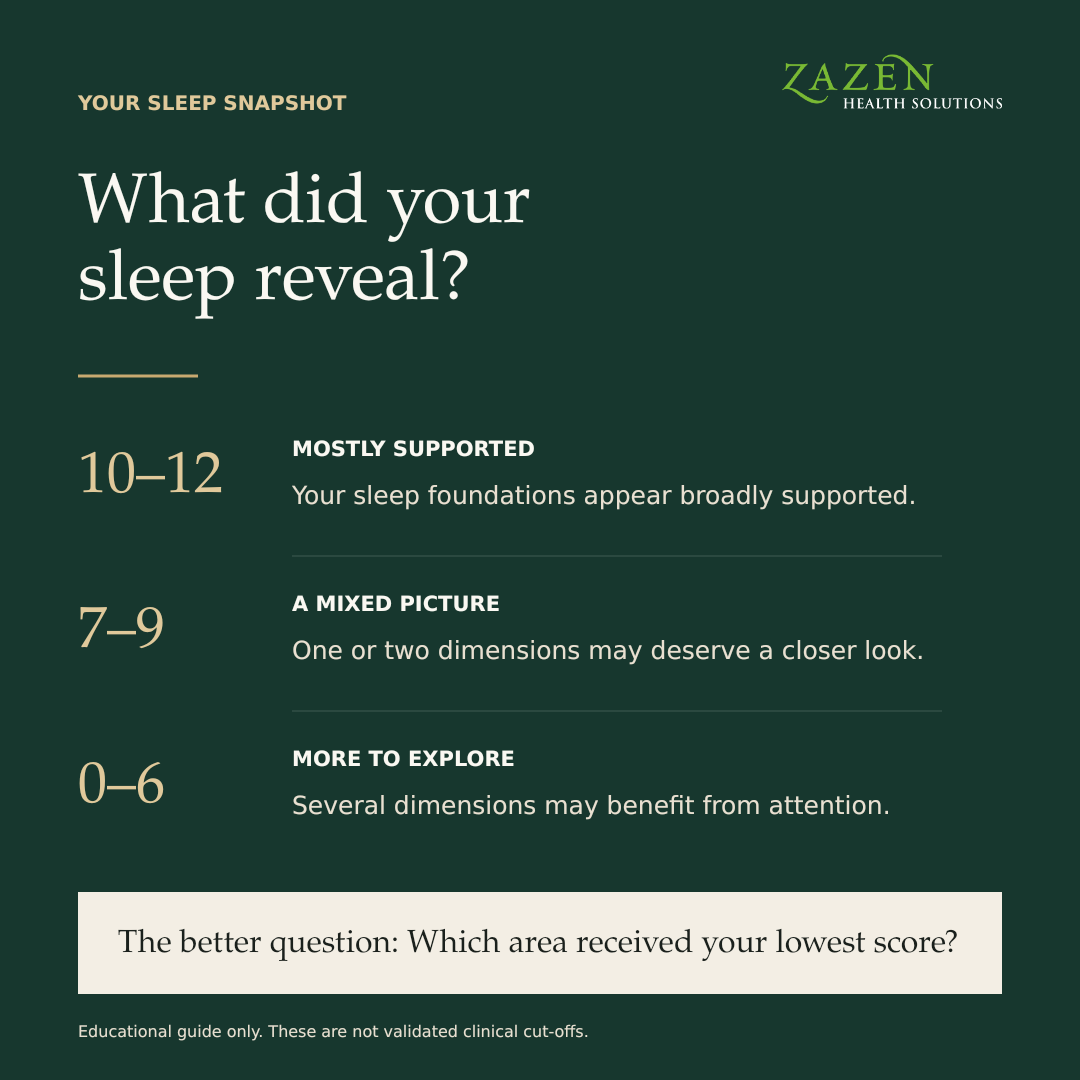
Swipe through, score each question and notice which area receives your lowest score. That may reveal more than your total.

Which aspect of your sleep surprised you most?


This is an educational self-check, not a diagnostic assessment.
#SleepHealth #SleepScience #HealthyLongevity #BrainHealth #ZHS

0
0

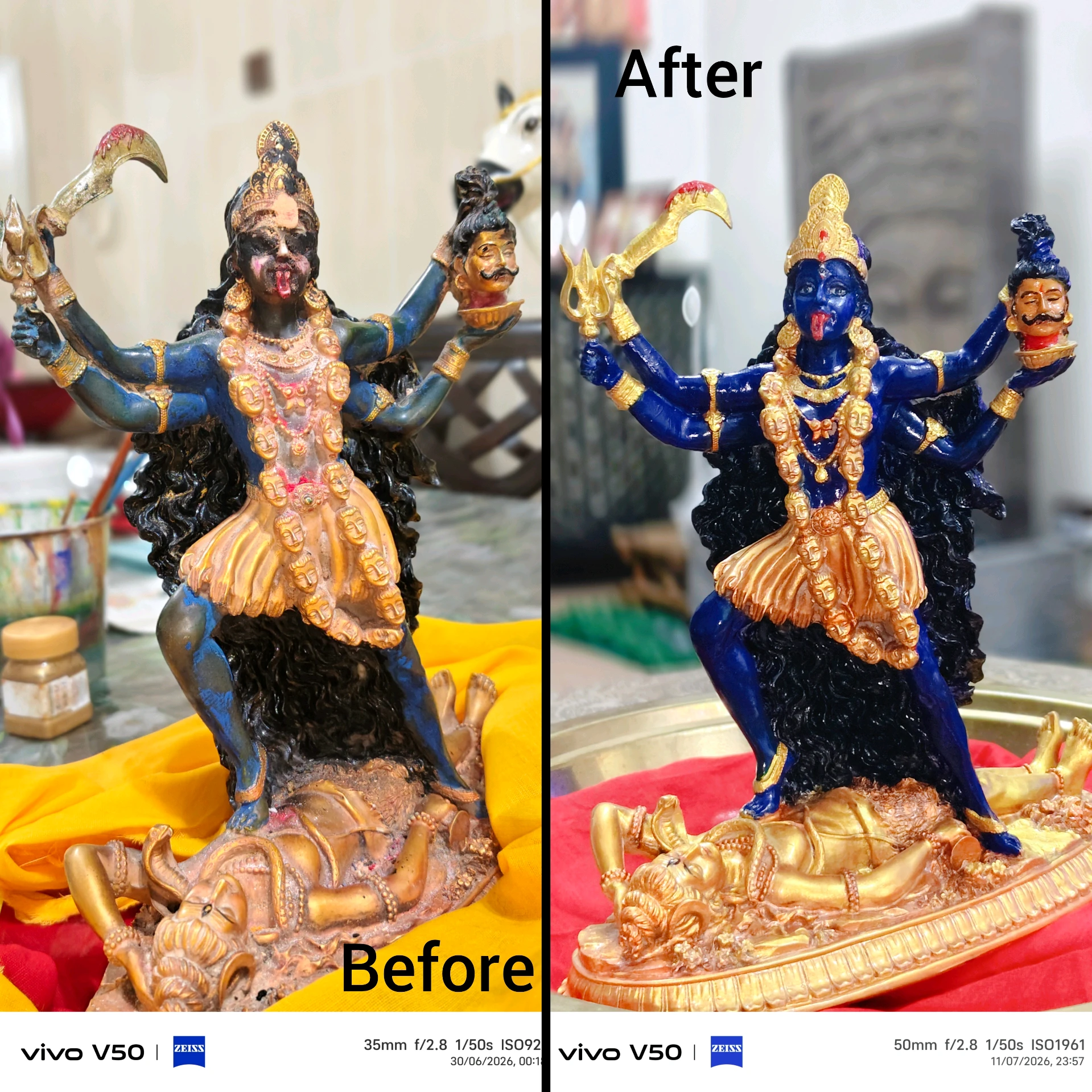
Statue Restoration

There is a profound sense of purpose in taking something weathered by time and breathing new life into it.The meticulous work of retouching brings me a quiet, meditative peace. Carefully repairing the surface and blending the paints grounds me and allows me to connect deeply with the form of the art.
​I feel honored to restore these statues.
6
0

Madrid

Madrid.jpg
Enjoying the streets of Madrid. The food, the beautiful buildings, the colors. The people, the friendliness. Joining their worry for the wildfires. Joining their celebration of football champions. Wish to bring some sunshine back home.
26
2
Article

Studying personality disorder: why are personality disorders difficult to treat?

Reflecting on what I learned in school and some recent studies.

Personality disorder is a diathesis-stress model — biological “diatheses” are inborn vulnerabilities, and environmental stressors interact with them. There are genetic predispositions that could be identified through family history. Within a family that carries the illness and possibly family dysfunction, it’s very likely to experience the toxic interpersonal relationships and also adapt the toxicity. Disturbance of early attachment formation is considered a key driver. 44-47% of the BPD patients in a study reported memories of childhood traumas. It’s like a net itself, that an inborn vulnerability with some genetic traits and meanwhile an environment that would reinforce those traits till it’s a formed disorder.

That explains why personality disorders are very challenging to treat, “because thoughts and behaviors are deeply rooted in a person's identity, patients often lack insight into their condition, and the patterns are resistant to change” (quoted by SOL mental health). People with personality disorder usually blame others for causing their problems rather than self reflecting on their behaviors.

The treatments have to be systematic, structured and long term. But many times even within a good treatment/ environment, patients still tend to drop out and refuse to seek help, by denying either their conditions or devaluing the therapists’ / professionals’ work.

Reference article: Why personality disorders are so difficult to treat? https://www.solmentalhealth.com/blog/why-personality-disorders-are-so-hard-to-treat
10
0